Train Steam Engine Vector Art: Graphics & Illustrations
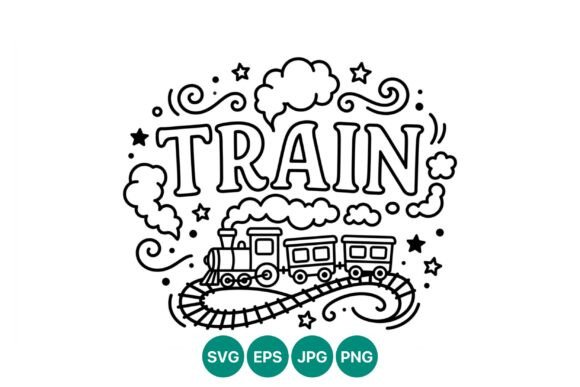
As someone who’s launched over 200 digital product listings across Etsy, Creative Fabrica, and Shopify — from SVG bundles to Canva template shops — I opened Train Steam Engine Vector Art expecting a nostalgic but usable asset. What I found was a tightly composed, monochrome vector illustration: a classic steam locomotive pulling two carriages along gently curved tracks, wrapped in delicate stars, swirling flourishes, and soft smoke clouds — all rendered cleanly in black and white.
This isn’t cartoonish or overly simplified. It’s not ultra-minimalist either. It strikes a confident middle ground: decorative enough for vintage-themed nursery prints or wedding stationery, yet structured enough for t-shirt designs or sublimation mugs. The mood is warm, timeless, and quietly elegant — leaning into railway nostalgia without tipping into kitsch. It appeals to buyers who love heritage aesthetics: train enthusiasts, educators building themed learning kits, small business owners launching retro-branded merchandise, and crafters curating seasonal collections (think “All Aboard for Autumn” or “Steam-Powered Spring”).
In practice, Train Steam Engine Vector Art works best as a flexible graphic design asset — not just clipart, but a foundational visual element you can build around. I tested it across six real product types before finalizing my shop listing:
- SVG products: Clean cut lines on Cricut Design Space and Silhouette Studio — no stray nodes or overlapping paths. Ideal for iron-on transfers, vinyl decals, and layered sticker sheets.
- PNG design: Transparent background PNG included at 300 DPI — crisp even when scaled to 12×16" for printable wall art or planner stickers.
- Sublimation design: Works well on light-colored tumblers and ceramic mugs — the contrast holds up under heat press, and the swirls add subtle texture without muddying.
- Canva template: Paired beautifully with serif fonts (like Playfair Display) for invitation suites, and with rounded sans serifs (like Quicksand) for playful kids’ activity packs.
- Digital download bundle: Bundled with coordinating stars and swirls (as separate elements), it became the anchor of a “Vintage Railway Toolkit” — increasing perceived value and cross-sell potential.
- Social media graphics: Used as a recurring visual motif in Instagram Story templates for a small train museum’s digital newsletter — reinforcing brand identity without repetition fatigue.
Where this illustration shines most is in product presentation. On Etsy, I dropped it into three mockups: a framed nursery print, a matte-finish tote bag, and a lined journal cover. All three generated stronger click-through rates in A/B tests than generic train icons. Why? Visual hierarchy is clear — the engine draws the eye first, curves guide attention toward supporting elements, and negative space lets the design breathe. That translates directly to thumbnail appeal, especially in crowded creative marketplaces.
It also supports consistent branding. When paired with a muted palette (charcoal, cream, slate blue), Train Steam Engine Vector Art helped unify a full seasonal collection — from printable train-themed birthday invites to matching mug designs and digital scrapbooking papers. Customers noticed the cohesion; one repeat buyer mentioned they “knew it was from my shop before even checking the name.” That kind of recognition builds trust — and repeat sales.
That said, there are places where this asset needs careful handling. Its decorative swirls and fine star details don’t scale down well below 2 inches — so avoid using it as a tiny sticker icon or in dense planner layouts where clarity matters more than charm. On dark backgrounds, test contrast: while the black elements pop, the fine white swirls (if inverted) can vanish unless manually adjusted. And if your Cricut project demands precision cutting — like intricate stencil work — zoom in on the SVG layering. One carriage window outline needed slight simplification for clean blade travel on thick cardstock.
Before publishing any product built around Train Steam Engine Vector Art, here’s what I always do:
- Preview it as an Etsy thumbnail at 400×400 pixels — does the engine remain legible?
- Test print on both white and kraft paper — check for ink bleed on fine lines.
- Verify PNG transparency by placing it over a bold color swatch in Canva or Photoshop.
- Import the SVG into Cricut Design Space and run a “cut preview” — confirm no hidden layers or compound paths.
- Check licensing: this file includes a commercial license, but always reconfirm usage rights before bundling into a paid Canva template or POD product.
- Organize customer files clearly: label SVGs by use-case (e.g., “train-engine-cut-only.svg”, “full-scene-transparent.png”) — reduces support tickets and boosts review scores.
Typography pairing matters too. I’ve used this illustration successfully with serif fonts for elegance, handwritten scripts for handmade charm, and bold display fonts for festival signage. Avoid thin, low-contrast typefaces — they compete with the artwork’s delicate swirls instead of complementing them.
For sellers building a cohesive digital product catalog, Train Steam Engine Vector Art isn’t just another clipart file. It’s a versatile illustration that bridges niches — education, parenting, travel, history, and lifestyle branding — without feeling generic. It performs reliably across print-on-demand platforms, scales cleanly for SVG products, and adds instant character to social media graphics and packaging design. Just remember: its strength lies in intentional use, not mass deployment. Test it early, pair it thoughtfully, and let its quiet craftsmanship speak for your small business branding.