Marrakech Arabic Ornamental Circle in Embroidery Work
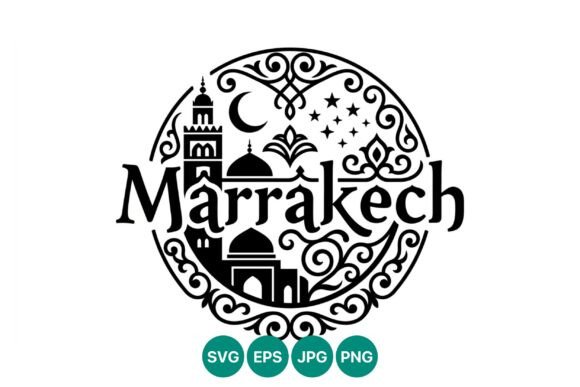
Opening a black and white vector file always feels like a quiet moment of possibility. With Marrakech Arabic Ornamental Circle, the first thing that hits me is the symmetry. It is not just a decorative ring. It is a carefully balanced composition where the word marrakech sits at the center, framed by a crescent moon, scattered stars, pointed arabic arches, and ornamental swirls that pull the eye inward. The mood feels storied, a little romantic, and grounded in a cultural aesthetic that embroidery buyers genuinely respond to. This is a design that wants to be stitched on something that will be seen, touched, and kept.
What This Design Communicates Before a Single Stitch
When I scroll through mockups and preview files, I am not just looking at shapes. I am reading the personality of the artwork. Marrakech Arabic Ornamental Circle speaks in a calm, confident voice. The black and white vector styling keeps the focus on form and negative space, which is a massive advantage for embroidery digitizing. There is no color distraction. You immediately see where the satin stitch will run, where fill stitch density needs to breathe, and where tiny running stitch details will need testing. The crescent moon and star motifs inside the circle give it an almost celestial texture, while the arabic arches and swirls add a handcrafted, old-world feel that boutique shoppers love.
First Test in Mind: The Custom Tote Bag Project
I mentally placed this design on a natural canvas tote bag for a client who sells handmade products at weekend markets. The tote is a medium-weight cotton, structured but soft, and the front panel gives me a clean flat surface. In my head, I stitched Marrakech Arabic Ornamental Circle in a deep charcoal thread on cream fabric, with the ornamental circle sitting around five inches wide. The result felt elevated immediately. It turned a plain tote into something that looks curated, like a boutique find rather than a craft project. That is the kind of transformation I look for when evaluating embroidery files before committing to a production run.
Where the Symmetrical Layout Shines Brightest
Symmetry in embroidery is a gift. It means the visual weight distributes evenly, and the finished product looks balanced on apparel, home goods, and accessories. With Marrakech Arabic Ornamental Circle, the circular framing makes it ideal for center-chest sweatshirt embroidery, tote bag fronts, pillow cover centers, and even the back panel of a denim jacket. The word marrakech sits horizontally inside the circle, which anchors the design and gives it a readable focal point. The swirls and arches radiate outward without overwhelming the lettering, which is a delicate balance that many ornamental designs get wrong. This one holds it well.
Thinking Like a Small Business Owner
If I were listing this as a finished product in an Etsy shop or at a craft fair table, I would lean into the travel-inspired, wanderlust aesthetic. Products featuring Marrakech Arabic Ornamental Circle would naturally attract customers looking for personalized gifts with a global, artisanal feel. I can see it on a linen pillow cover for a wedding gift, a kitchen towel for someone who loves Moroccan decor, or a lightweight sweatshirt for a cozy but cultured look. The design carries enough detail to feel premium, but not so much that it becomes a stitching nightmare on textured fabrics or tighter hoop sizes.
Fabric and Texture: What Works and What Needs Care
On smooth cotton, linen blends, and medium-weight canvas, this design will stitch beautifully. The black and white vector art translates well to thread, and the contrast stays strong. On terry cloth or heavily textured fabrics, the small star details and thin swirl lines could lose definition. I would avoid stitching Marrakech Arabic Ornamental Circle on anything too plush unless I size it up and adjust the stitch density accordingly. Stretchy fabrics like thin jersey or ribbed knit can distort the circular shape if the stabilizer is not on point. A cutaway stabilizer is your friend here, especially for apparel that will be washed and worn frequently.
Hoop Size and Placement Realities
Circular designs are deceptively simple. The round shape feels natural, but the outer ornamental ring must fit comfortably inside your hoop with some margin. If the design pushes too close to the hoop edge, the swirls at the top and bottom can distort or catch. I recommend checking the exact dimensions before loading the embroidery file. For a standard four-by-four hoop, this design may need to be scaled down, and that is where the small details matter. The stars and the thin portions of the arabic arches should be checked at reduced size to ensure they do not turn into a single blurry stitch line. A test stitch on scrap fabric is non-negotiable here.
Thread Color Choices That Elevate the Artwork
The black and white nature of the original vector art gives you a lot of freedom. I like to test it in monochrome first, black thread on light fabric or white thread on dark fabric, to see how the ornamental details read. A deep navy, charcoal, or even a muted gold thread can shift the mood entirely. On a dark sweatshirt, white or cream thread makes the crescent moon and stars pop. On a natural linen apron, a warm brown or olive thread softens the design and gives it an earthy, handmade feel. The key is maintaining enough contrast so the word marrakech remains legible and the swirls do not blend into the fabric.
Where This Design Adds Real Product Value
Handmade products live and die by visual impact. Marrakech Arabic Ornamental Circle adds a layer of intentionality that raises the perceived value of whatever it touches. A plain baby blanket becomes a meaningful keepsake. A simple cap becomes a statement accessory. A basic apron becomes a gift that feels personally chosen. This is the kind of design that helps small shop owners build a recognizable brand aesthetic. Customers remember the crescent moon and the ornamental circle, and they come back looking for more pieces in that same visual family.
Commercial Use and the Licensing Question
Before stitching this design onto products for sale, I always pause to review the licensing. The product description mentions a ZIP folder with vector art, which suggests this is a graphic file rather than a pre-digitized embroidery file. That means you will need to digitize it yourself or work with a digitizer to create the stitch file. The good news is that the clean black and white lines make digitizing straightforward for an experienced professional. What matters most is confirming that commercial use is allowed on finished physical products. If you plan to sell the digitized embroidery file itself, double-check the license terms. Never assume. Always verify.
Stitch Density and Detail Preservation
Ornamental designs with swirls and thin decorative elements need careful attention to stitch density. The arabic arches in Marrakech Arabic Ornamental Circle have elegant, slender curves that could become too dense and stiff if over-digitized. A lighter fill stitch or a well-placed satin stitch with reduced density will keep the fabric soft and the design wearable. The stars and crescent moon are small but essential visual anchors. If they stitch too heavy, they lose their delicate sparkle. If they stitch too light, they disappear after a few washes. Test, wash, dry, and inspect. That is the only way to know if the embroidery file holds up to real life.
Holiday Gift Potential and Seasonal Appeal
This design has a subtle holiday crossover that I did not expect at first. The crescent moon and star motif combined with the ornamental circle gives it a slightly celestial, almost festive feel when stitched in metallic thread or placed on deep colored fabric. I can see it on a velvet pillow cover for a holiday collection, or on a dark apron as a thoughtful hostess gift. The word marrakech adds a travel element that makes it feel like a gift from somewhere far away, even if it was stitched in a home studio. That emotional layer matters in a crowded handmade market.
Printable Mockups and Digital Product Previews
For sellers who create digital product previews or printable mockups, the black and white vector format of Marrakech Arabic Ornamental Circle is a strong asset. It drops cleanly onto lifestyle images and product photography without clashing with background colors. The symmetry photographs well, and the ornamental circle frames the listing thumbnail beautifully. When I design mockups for Etsy listings, I want the artwork to be instantly recognizable even at a small size. This design holds that clarity. The arched and curved shapes draw the eye in a way that rectangular or irregular designs sometimes cannot.
Watch Points for Caps, Hats, and Curved Surfaces
Embroidering on caps and hats is its own challenge. The curved surface and the center seam can distort circular designs if the placement is not precise. Marrakech Arabic Ornamental Circle can work on a structured cap front, but I would keep the design size moderate and use a cap-specific hoop and backing. The lower portion of the ornamental circle, where the swirls and arches meet the bottom edge, may need slight adjustment to avoid the seam. On a beanie or a slouchy hat, the stretch factor is the main concern. A topper and a firm stabilizer help, but test on the actual hat blank before committing to a batch order.
Building a Collection Around This Design
One of the first things I consider when reviewing a design is whether it can anchor a small product collection. Marrakech Arabic Ornamental Circle has enough visual personality to lead a cohesive line. I would pair it with a coordinating geometric border, a smaller crescent moon accent, or a simplified arch motif for companion pieces. A tote bag with the full circle design, a matching zipper pouch with just the moon and stars, and a key fob with the word marrakech in a clean font would make a compelling set at a craft fair. Bundles sell better than single items, and this design gives you a strong starting point.
Fabric Color and Contrast Testing
Dark fabric is where this design can either look dramatic or disappear. The black and white vector gives you a template, but thread choice on dark backgrounds is everything. A bright white thread on a black sweatshirt makes the ornamental circle feel crisp and modern. A soft cream thread on a deep navy fabric gives it a vintage, heirloom quality. I recommend testing the design on at least two contrasting fabric colors before finalizing your product photography. The way the arabesque swirls read against the background will influence how customers perceive the finished product online.
Stabilizer and Washing Durability
Products that need frequent washing, like kitchen towels, baby items, and everyday apparel, demand a durable embroidery setup. For Marrakech Arabic Ornamental Circle, I use a cutaway stabilizer on garments and a tear-away with a light fusible backing on flat home goods. The thin swirls and small star points are the first places where wear and tear will show, so lock those stitches well and avoid overly long satin stitch runs that can snag. A gentle wash cycle and a low-heat dry extend the life of the embroidery, but honestly, most customers will not baby their items. Design for real life, not just the display table.
Why This Design Earns a Place in a Craft Business
After running through the mental checklist, fabric tests, placement scenarios, and customer reactions, Marrakech Arabic Ornamental Circle earns its spot in the embroidery rotation. It is not the simplest design to stitch, but it is far from the most difficult. The ornamental details reward careful digitizing and thoughtful thread selection. The final product looks intentional, culturally rich, and genuinely appealing to a broad audience. Whether you are stitching a single personalized gift or a full boutique product line, this design delivers a finished look that feels worth the effort. That is the standard I hold for every embroidery file I use, and this one meets it with quiet confidence.