Loop by Loop Crochet Hook Lettering
A Playful, Handmade Vibe—Right Out of the Gate
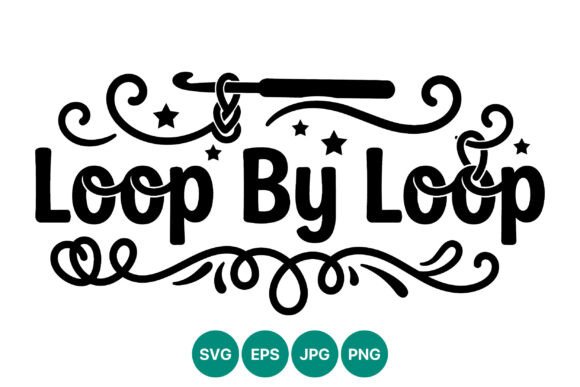
The first thing that strikes me about Loop by Loop Crochet Hook Lettering is its cheerful, approachable energy. It’s not stiff or overly polished—it feels like something a crafty friend might sketch in a notebook before stitching it onto her favorite apron. The black-and-white vector art centers on the phrase “loop by loop,” with a stylized crochet hook perched above and light decorative swirls and stars orbiting the text. There’s rhythm in the spacing, warmth in the curves, and just enough whimsy to signal “handmade with care”—without tipping into cutesy overload. For embroidery designers, that balance matters: it reads as intentional, not accidental.
Where This Design Finds Its Truest Home
I recently tested Loop by Loop Crochet Hook Lettering as the focal point for a custom embroidered cotton tote bag—intended for a local yarn shop’s holiday pop-up. The design scaled beautifully at 4.5 inches wide, holding clarity in both satin-stitched letters and the fine lines of the hook and stars. On natural canvas, it looked inviting—not too busy, not too sparse—and customers immediately recognized the theme. That’s the sweet spot: products where the message *and* the medium align. Think sweatshirt embroidery for craft fairs, baby onesies (paired with soft pastel thread), tea towels for handmade kitchen shops, or pillow covers for cozy nursery decor. It also works well as an embroidered patch—especially when stitched with subtle variegated thread to echo yarn texture.
Why Craft Business Owners Will Appreciate Its Flexibility
As an Etsy seller myself, I pay close attention to how a design supports storytelling and brand consistency. Loop by Loop Crochet Hook Lettering doesn’t shout—it invites. That makes it ideal for small shop merchandise where authenticity matters more than flash. It pairs naturally with minimalist branding, handwritten tags, and earthy packaging. When used on a linen apron for a boutique baking class—or stitched onto a denim cap for a fiber-arts retreat—it reinforces a thoughtful, process-oriented identity. Buyers don’t just see lettering; they see intention. And that builds trust faster than any sales copy.
Real Embroidery Considerations—Not Just Pretty Pixels
Vector art looks flawless on screen—but embroidery is physical. Here’s what I watched for:
- Detail fidelity: The swirls and stars are delicate but not micro-fine. They translate cleanly down to ~2.5" width with standard stabilizer—no vanishing lines or skipped stitches on mid-weight cotton or twill.
- Letter legibility: “Loop by loop” stays readable even at smaller scales, thanks to generous counter space and consistent stroke weight. Avoid shrinking below 1.75" unless you’re using fill stitch + dense underlay—running stitch alone won’t hold the shape on stretchy fabric.
- Hook and star placement: The crochet hook sits high and clear—no risk of being lost in collar seams or curved cap fronts. Stars act as visual anchors, not clutter, so they hold up well on textured fabrics like terry cloth or bouclé.
Where to Proceed Thoughtfully
This isn’t a one-size-fits-all embroidery file. Use caution on:
- Thin or sheer fabrics: The open swirls can cause puckering without proper cutaway stabilizer—test on scrap silk or rayon first.
- Dark or heavily textured backgrounds: Since it’s black-and-white vector art, contrast depends entirely on your thread choice. On navy sweatshirts, white or cream thread reads best; avoid light gray unless you’re aiming for subtlety.
- Curved surfaces like caps or baby hats: The horizontal layout works, but center the design carefully—the hook should sit comfortably above the curve, not get distorted by the dome.
- Frequent-wash items: For baby embroidery or kitchen towels, reinforce satin-stitched letters with a light topping of running stitch or use matte poly thread to reduce shine wear.
Design Assets That Earn Their Place in Your Workflow
What makes Loop by Loop Crochet Hook Lettering more than just another illustration? It’s built for action—not just display. The included SVG and PNG files mean you can tweak spacing in your embroidery software, convert outlines for applique designs, or drop it into printable mockups for client previews. As a digital embroidery file, it respects workflow realities: no overlapping paths, clean anchor points, and scalable geometry that holds up in both machine embroidery design and hand-drawn reinterpretation.
Practical Designer Notes—Before You Stitch
Always test Loop by Loop Crochet Hook Lettering on scrap fabric first—especially if pairing with textured thread or blending stitch types. Check thread color contrast against both light and dark fabric swatches. Review stitch density: too dense, and it’ll feel stiff on a baby onesie; too sparse, and the stars lose definition on a tote bag. Confirm hoop size compatibility—this design flows best in 4"–6" hoops. Inspect small details at actual stitch-out size, not just on screen. And crucially: verify licensing terms before selling finished products or bundling it into digital embroidery kits. As Graphics, it’s meant to be adapted—but commercial embroidery requires clarity on usage rights.
Final Thought: A Design That Feels Like a Conversation Starter
I’ve seen dozens of crochet-themed embroidery files—many overdesigned, some too generic. Loop by Loop Crochet Hook Lettering stands out because it feels human. It doesn’t try to be everything; it leans into its niche with warmth and precision. Whether you’re stitching personalized gifts, building a craft business identity, or creating small shop product lines, this design earns its place—not because it’s trendy, but because it communicates care, craft, and quiet confidence. That’s the kind of detail your customers notice. And remember: in handmade product markets, those quiet details are what turn a one-time buyer into a repeat fan.